
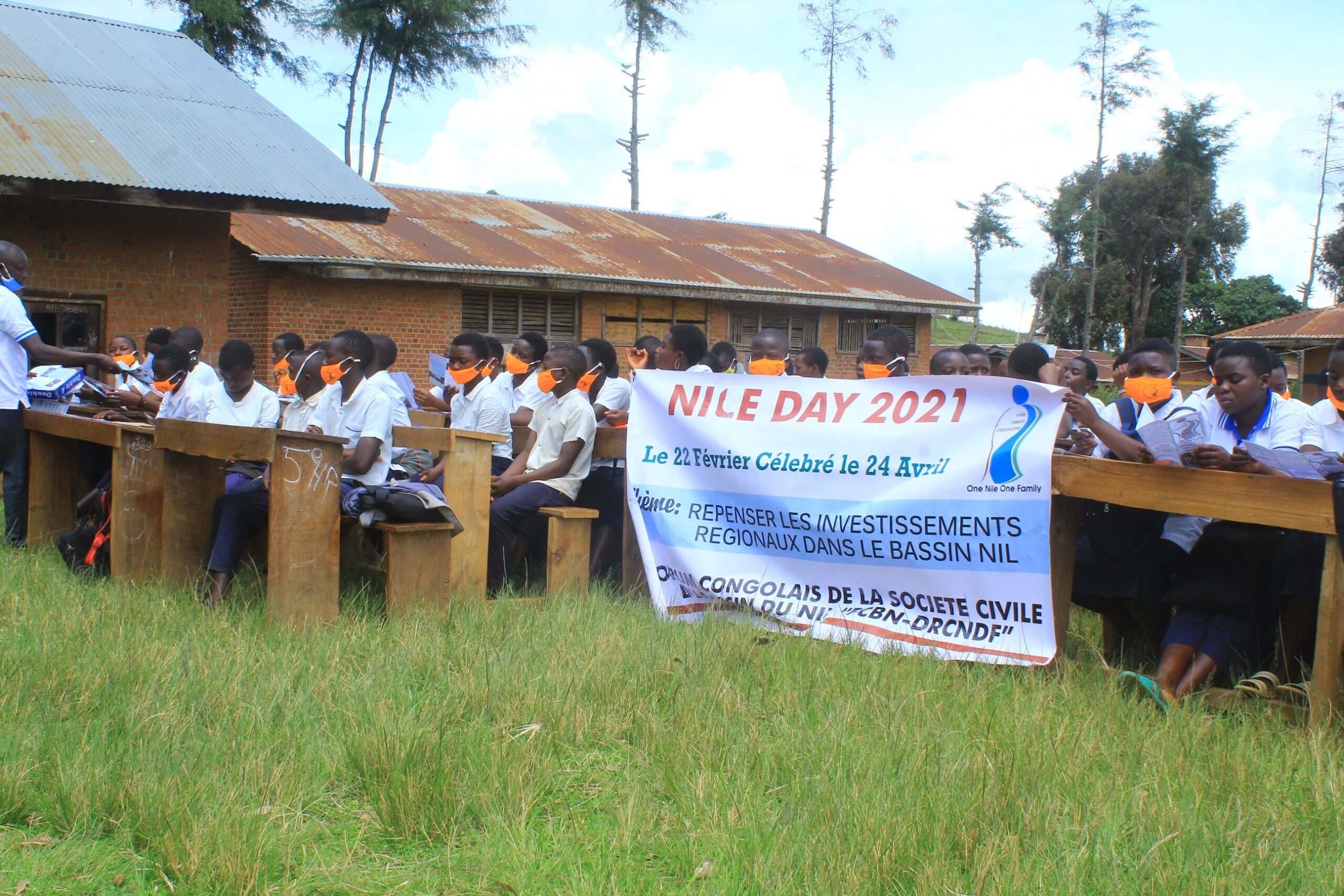
Nile Day 2021

Nil Day is 22th February but in 2021 it was celebrated on 24th April
This organization gathers 11 countries whose watersheds contribute to the Nile River Basin namely, Burundi, DR Congo, Egypt, Eritrea (still observer), Ethiopia, Kenya, Rwanda, South Sudan, Sudan, Tanzania and Uganda.
Thus, since then, February 22 of each year has been dedicated to the Nile River under the name of “Nile Day”. The day has always been commemorated under a regional theme to bring all the countries in the region to reflect on common problems.
In parallel to NBI composed of the Basin governments, there is the Nile Basin Discourse (NBD) which is a network of civil society organizations created in 2003 with the support of the World Bank and other development partners to strengthen the participation of civil society in the development processes, projects, programs and policies of the Nile Basin
This is why February 22, 2021 was celebrated under the theme: “Rethinking Regional Investments in the Nile Basin”.
The DRC being one of the 11 member countries of the Basin is not left out of this celebration.
However, due to the Covid 19 pandemic ravaging the world and the insecurity in eastern DRC, the DRCNDF has decided to postpone the celebration of the day on April 24, 2021 in the city of Kyondo.
KYONDO is a rural commune in the territory of Beni located at 33 km in the south-east of Butembo city on the road that leads to Lake Edward. This municipality is entirely located in the Congolese Nile Basin at 2168 m altitude. Kyondo is a market gardening region which produces a lot of vegetables which feeds the populations of the cities of Butembo and Beni. At the days the event, population of the city is 30 779 citizens among them 14 750 men and 16 029 women.
Kyondo is a secure area in the Congolese Nile Basin that has welcomed other populations fleeing the troubles in other villages. This population concentration has an impact on the environment: a strong extraction of sand in the Talihya River, one of the largest tributaries of the SEMLIKI River and deforestation in the surrounding area. This demographic pressure on the resources and the activities of the population make the environment more and more altered.
That is why we have chosen to sensitize the population through our speeches that focused on some environmental aspects of this area, the level of environmental deterioration of the Talihya River and their impact on the lives of people. Recommendations and modalities of actions were considered in this Nile Memorial Day in order to fight against the danger. We celebrated this day with the different strata of the populations in order to push them to rethink their investments in the environment domain.
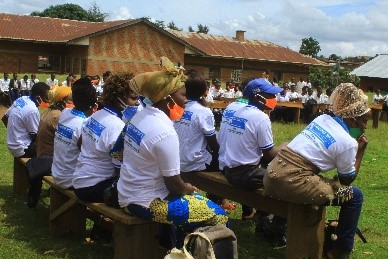
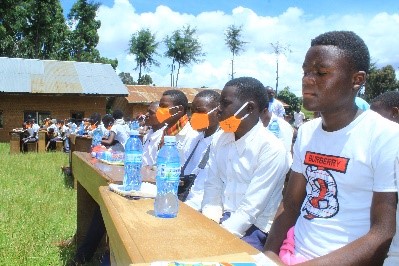
Objectives of the event
The overall objective of this Nile Day celebration is to get the population of the Congolese Nile Basin to rethink investments in the region in order to adapt to and combat the effects of climate change.
Specific objectives
To sensitize the population of Kyondo and other participants to the Nile Day on sustainable and participatory environmental management in the
Reorient the intervention strategy of DRCNDF members participating to the NILE Day towards sustainable investments
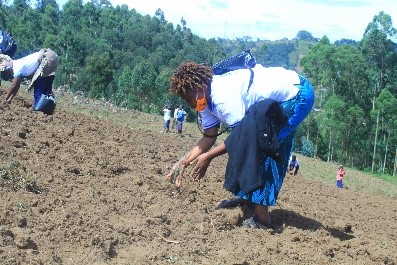
Plant trees in the school concession of ITA as an example of sustainable investments.
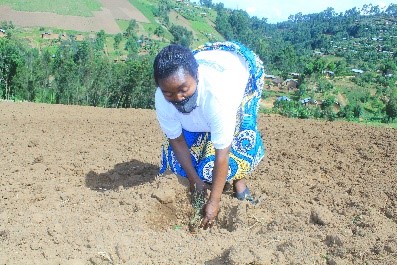
Distribute fruit trees to pupils who attended the conference in order to plant them in home plots as an incentive for agroforestry
To bring the sand operators to better apprehend the risks of disaster related to the overexploitation of sand in Talihya River.
Collect data on the practices of women and young people in relation to the protection and destruction of the environment in order to carry out an action research and their participation in the community awareness on reforestation
Profile and number of participants
N0 | Profile of participants | Number of participants | Remarks |
1. | DRCNDF Members | 22 | DRCNDF Members |
2. | Teachers and pupils of ITA | 209 | Teachers and pupils from 3rd, 4th and 5th classes (Veterinary, Agronomy and pedagogy) |
3. | Social leaders | 8 | Local civil society member, Head master, the head of the school sub-division, the representative of women’s associations and the representative of youth associations |
4. | Government offices
| 5 | The mayor of Kyondo, the heads of the environment department of Kyondo and Butembo, the head of the agriculture and fishing department of Kyondo, the Secretary general of Kyondo, |
5. | Sand operators | 6 | Representatives of sand operators |
6. | Media and camera services | 5 | Digital Congo radio, Topcongo fm and 3 photographers |
Total | 255 |
| |
1. Main topics/issues covered/discussed during the event
During the event, we discussed about different issues which are the following :
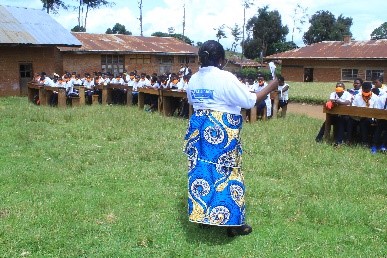
Presentation about the DRCNDF and the NBD
This presentation was presented by the KAKULE KATUNGU Therese, the DRCNDF Chair person in order to let know participants the what are the DRCNDF and the NBD, how they work, their objectives, their activities during these days of climate change and how peasants can work with these organizations.
Rethinking investments in the Congolese Nile Basin
The topic was developped by the DRCNDF NTSE, Paluku Tahawasima Elias who shared with particpants about what should be the targets of new investments in the Congolese Nile Basin and how should we orient our investments while the population has a great desire to benefit from the resources of the Basin. The heart of the debate was oriented towards thoughts on water, agriculture, energy, the environment (with emphisis on the climate change), children’s education and the safety in the region because without it there is no activity that can be done.
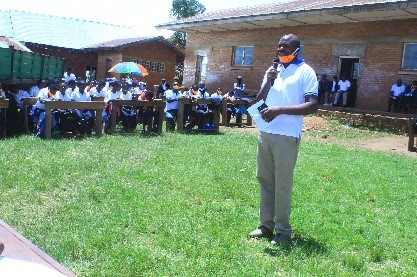
The local practice of chlorine production
The topis was developped by Mr. KATWALA of Hydraulique Sans Frontiere, an organization specialized in producing chlorine. The presenter showed to participant hoew they produce the chlorine and talked about the importance of it during these days of epidemies.
The role of trees in the struggle against climate change
The role of trees in the struggle against climate change was presented bu Mr FATAKI BALOTI, an environmentalst who conviced participants about the importnace of trees stabilizing the climate in the region of Nile Basin in general and at Kyondo in particular. So, he sentized participants to apply agroforestry in their fields for trees have been more used these days than ever for building, cooking, making fournitures, burning brics apart fron the key role played by trees in environment. At the end of his speech, participants were committed to replants trees in the regions and to sensitize farmers for that cause.
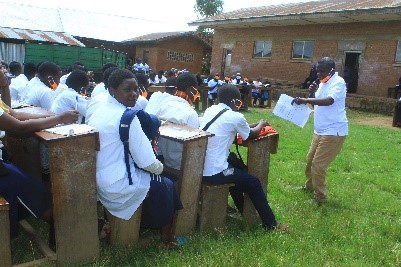
Questionnaire on the practices of women and youth related to the protection and destruction of the environment
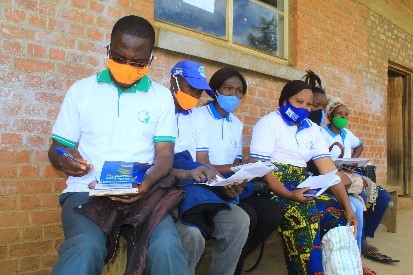
This questionnaire was presented to participants by the NTSE. He organized participants into 6 groups: the group of Pupils, the group of Teachers, the group of Social leaders, the group of sand operators, the group of government services and the group of DRCNDF Members. The objective was to collect ideas of differents categories about the the practices of women and youth related to the protection and destruction of the environment so that actions can focus on the cibled destroyers of the environment in order to bring them in a good way.
Interview guide to help sand operators better understand the disaster risks associated to the overexploitation of sand in the Talihya River
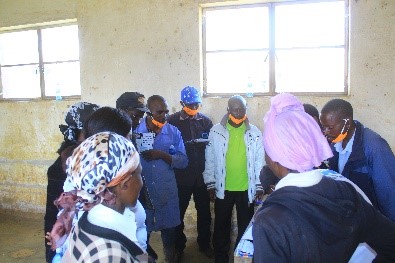
For this step, the DRCNDF MEMBERS, wanted to understand what sand operators think about their activities, advantages and consequences of their activies on the environment and to sensitized them for actions of protecting environment.
2. Results achieved
- The population of Kyondo and other participants in the Nile Day are sensitized on sustainable and participatory environmental management in the region
- DRCNDF members participating to the NILE Day are committed to reorienting their intervention strategy towards sustainable investments
- Trees have been planted in the school concession of ITA as an example of sustainable investments
- Pupils who attended the conference are committed to planting the fruit trees distributed to them in their home plots as an incentive for agroforestry. The tree fruits were distributed not only to pupils but also to teachers and others participants because It was a need in the Zone.
- The sand operators are aware of the risks of disaster linked to the overexploitation of sand in Talihya River and they committed themselves to the protection of the environment. Their answers are found on Annex no3
- Data on the practices of women and youth related to the protection and destruction of the environment are collected and analyzed for action research and their participation in community awareness on reforestation. So, we divided participants into the following 6 groups: Pupils, Teachers, social leaders, DRC NDF members, sand operators and Government services representatives. The combined answers of the 6 groups to the questionnaire are in Annex no 4
Conclusions and recommendations made
The Nile Day celebrated in Kyondo on April 24th was a very special day for the different strata of the Kyondo population, a day during which they were edified by the different activities and topics presented. This program included:
- Presentation about the DRCNDF and the NBD,
- Rethinking investments in the Congolese Nile Basin,
- The local practice of chlorine production,
- The role of trees in the struggle against climate change,
- Questionnaire on the practices of women and youth related to the protection and destruction of the environment,
- Interview guide to help sand operators better understand the disaster risks associated to the overexploitation of sand in the Talihya River and
- Planting of trees in the school concession.
So, participants made the following recommendations:
- The theme of the year should be a project that will be implemented in the following year for the benefit of local residents. So, the celebration sould be a sensitization of the population for the before implementation of that project.
- A great activity like this should be held for two or three days to allow the different social strata to exhaust their thoughts
- NBI institution should know that the NBD is accompanying that institution in the organization of the Nile Day. Thus, the representative of NBI in each country will have to be on the front line in the organization of the day so that the population does not consider it as a simple day of civil society.
Challenges faced and mitigation measures taken (if any)
- The insecurity in the region did not allow us to be with the maximum possible of our DRCNDF members
- The Kyondo Environment Department, which is supposed to popularize reforestation in the area, has no such policy.
- Sand operators do not encourage the promotion of erosion control hedges for environmental protection
because they think that such an initiative will appreciably diminish the flow of the sand which they extract from the river - We organized the workshop during a difficult time, a time when there was a total cessation of all activities from April 5 until April 25, 2021 following the demand for peace by all social strata. Thus, we had a difficulty in the preparation and especially in the supplies related to the Nile Day.
Lessons learnt
- We have learnt that the peasants of the Congolese Nile Basin need visits from members to share on the different areas of development in the region
- Citizens who live the Basin know the different problems of the basin, only they must be accompanied in the search of lasting solutions to these problems.
- Kyondo community radio is well listened to by Kyondo farmers compared to other media. Thus, for future actions in that place, this media will help us to sensitize the population
- All the women invited to Nile Day participated massively in this setting where cultural constraints are still strongly observable to the disadvantage