
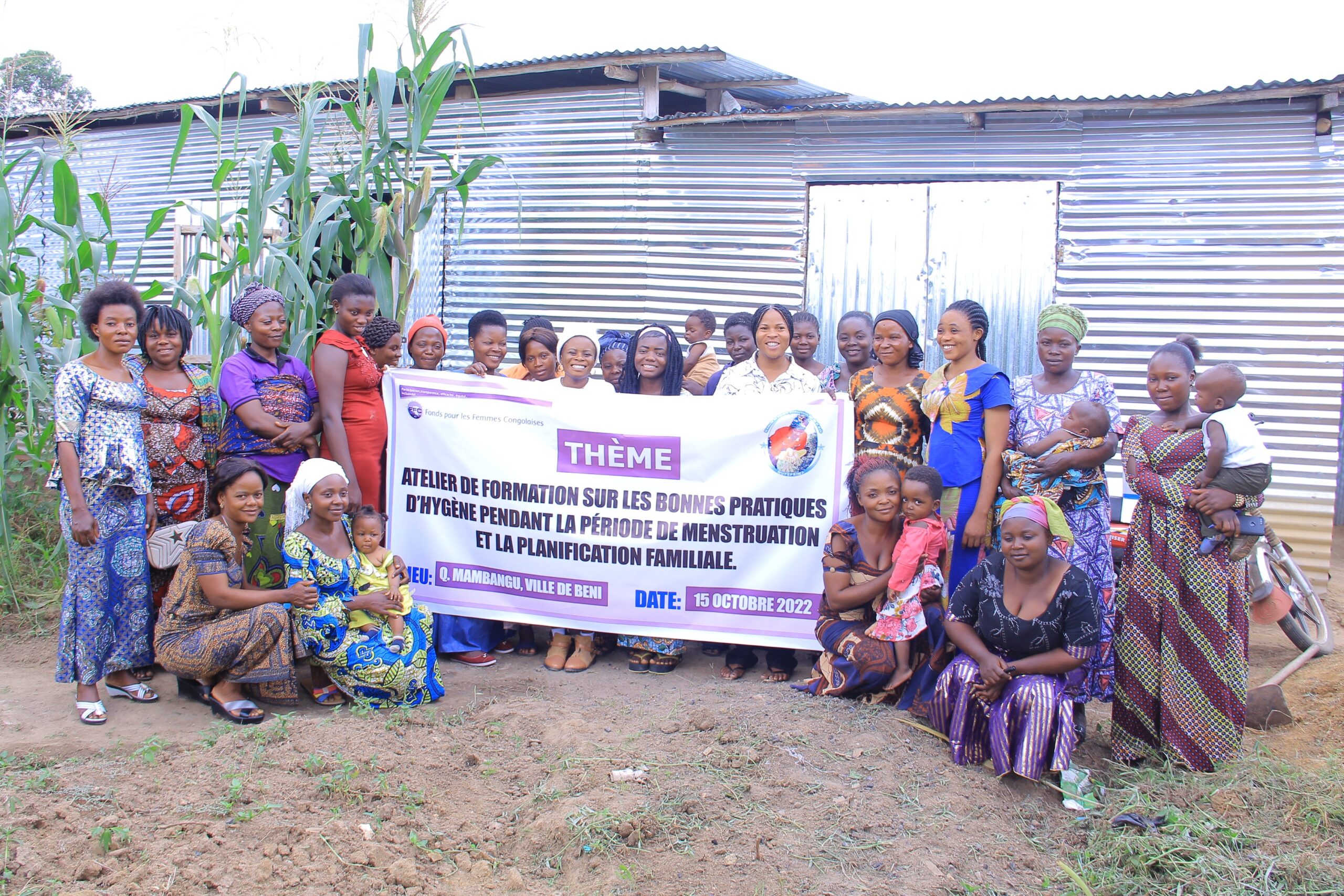
Training Workshop on menstrual hygiène and environmental protection

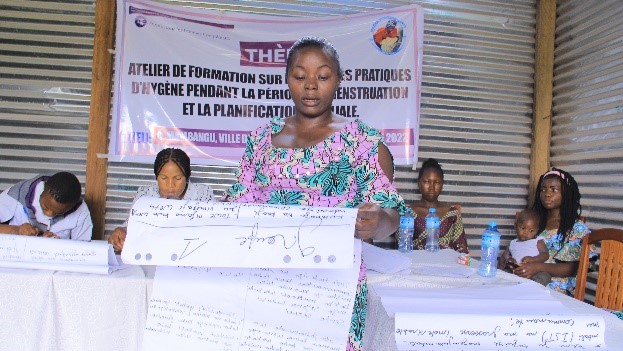
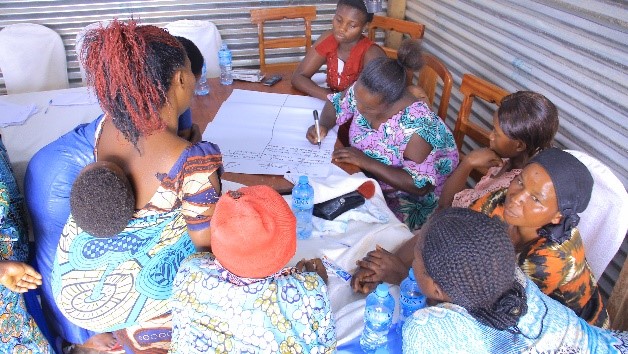
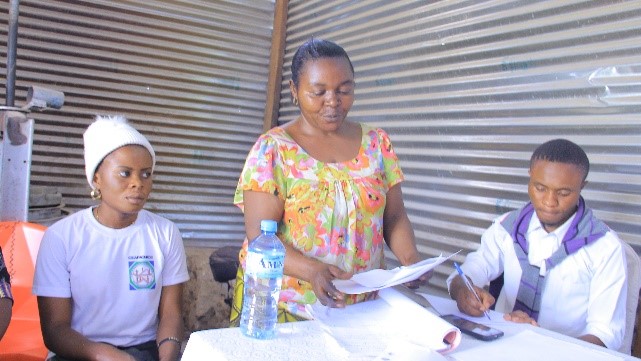
Mutuel des Femmes productrices de Riz et de Maîs (MUFEPRIMA) and Upendo are the two member organizations of the DRCNDF working in the territory of Beni who received feedback on the training workshop on women’s networking which took place in September 2022 in Butembo. After the restitution session, the women members of the two aforementioned NGOs were trained on female sexual hygiene in the face of environmental protection and these women were taught about ecological menstrual products and their health benefits.
As areas of intervention, MUFEPRIMA has food security, environmental management, processing of agricultural products and the empowerment of women. Its head office is in Beni city commune Mulekera, Kalinda Quarter. Upendo is headquartered in Beni Q. Mabango Commune Bungulu and its area of intervention are the processing of agricultural products, environmental protection and food security. The activities of these two women’s associations have made them give employment to both men and women and this contributes to the promotion of gender.The security situation in the territory of Beni prevents the two aforementioned NGOs from carrying out their activities well and they continue to ask that a plea be made in favor of the return of peace in the DRC in order to promote their development actions.
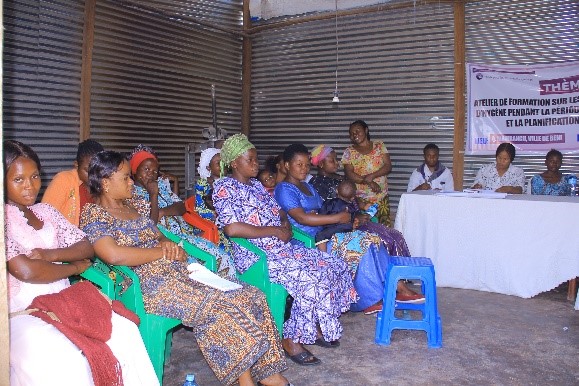
women's sexual health and environmental protection
Women’s sexual health cannot be discussed without talking about the menstrual periods that women experience every month apart from the time of pregnancy and during menopause. However, this period requiring special hygiene on the part of women has nowadays pushed women to adapt to new practices following the revolution of modernity. Nevertheless, the big question is whether the new practices do not push women to disrespect good environmental management practices?Disposable sanitary napkins and tampons are often made of toxic substances, are polluting and expensive. Many women opt for tampons, pads or panty liners during their period. These disposable pads are easy to use. But these products so close to female intimacy are often controversial for health, polluting and expensive.It is following these aforementioned reasons that the NGOs Mufeprima and Upedo of Beni city, Members of the DRCNDF, trained women on the harms of disposable and single-use menstrual products menstrual products on the protection of the environment. Thus, during the women’s training, three reasons for avoiding disposable sanitary protection were raised, in particular:
A questionable composition
When you buy a box of cookies, you can judge its quality by the list of ingredients. But that’s another story for female protection. The packaging very rarely indicates the composition of the products. However, each one wears them as close as possible to her body during the 2250 days of menstruation that counts the life of a woman.Even if manufacturers comply with current regulations, some choices could be more environmentally friendly. There is a lot of controversial topics since conventional brands use more or less the same materials in different parts of the tampons and pads.From wood, cotton, oil and water, the manufacturers compose the different parts of the feminine protections. In the end, the components are mostly synthetic or plastic materials (rayon, polyethylene, polyester, polypropylene) and cotton.Of course, non-renewable resources are not very ecological. But natural resources are not always the right solution. If rayon is made from wood fiber, it has to be transformed a lot before obtaining the final material. Another example, conventional cotton has a very polluting culture that uses a lot of pesticides and large amounts of water. We must also take into account the impact of treatments such as fiber bleaching.Plastic can also make up a large part of the protection. For example, a tampon can be surrounded by a plastic applicator. Everything is packed in a plastic bag. And the box itself is sometimes wrapped in plastic.The tests reveal residues of pesticides, dioxins, halogenated derivatives, phthalates… Traces of insecticide used in cotton growing are even found in a product devoid of this material. Some pollutants detected are considered probable carcinogens, endocrine disruptors or toxic to reproduction.
To reduce waste
A woman consumes large amounts of feminine protection. For napkins alone, that’s 1,447 sanitary napkins used every second worldwide. A single woman throws away around 10,000 tampons or pads in her lifetime. The quantities of waste produced are therefore enormous.The impact of disposable products is considerable. In question, their single and short-term use (from 4 to 8 hours). There is therefore a need to produce a lot and this generates large amounts of waste especially since these products are not recycled, despite their high plastic content.There is also a great temptation to flush these products down the toilet. An error that clogs the pipes, clogs the pipes and deteriorates the pumps for lifting the waste water.Many hygienic protections also end up in litter. They then end up in the rivers and then in the oceans. In 2009, the Ocean Conservancy collected approximately 24,600 tampons and applicators from beaches. This litter has impacts:
- A sanitary napkin takes between 500 and 800 years to decompose.
- Like much waste in the oceans, marine animals consume it. And these ingestions can block their digestive system and lead to their death.
To save money
Hygiene products are expensive. Depending on the brands, the cost of a tampon varies between 1 and 2 USD each in DRC. In total, a woman will spend in her life between 2250 and 4500 USD for feminine protections. While opting for reusable protection like the cup, you can save many and use it for other needs.
- Some alternatives respectful of the environment and the body : Tampons or towels, single-use hygienic protections are widely used. However, they have a significant impact on the environment. Polyethylene, bisphenol or glyphosate, several substances found are considered toxic or dangerous. More and more women are therefore choosing to turn to protections that are more respectful of the environment and their bodies. Here are a few.
- I period panties : Created in 2014 by the American company Thinx, menstrual panties have since become popular worldwide. They thus offer protection similar to a sanitary napkin (between 8 and 12 hours depending on the flow), while being reusable and machine washable (at 30°). However, these reusable panties turn out to be more cost-effective over time. An estimate by Le Monde claimed that periods cost women 3,800 euros (3954$) over their lifetime.·
- Washable pads and panty liners : Similar in function to menstrual panties, these pads can be reused and machine washed. It is however easier to change them away from home, by putting the used protections in a small waterproof bag, before being able to rinse them and put them in the washing machine at home. They also cost less than period panties, with a price of around 15 euros (15,4$) on average. You can also sew them yourself. To do this, you have to take the pattern of a washable panty liner, lay out an absorbent fabric, another raincoat, assemble them and sew everything following the lines of the pattern.
- The menstrual cup : Invented in 1937 by American actress Leona Chalmers, the menstrual cup only became popular recently. According to a survey conducted by Opinion Way in 2017, 9% of women said they used the “cup”. Washable and reusable, it is particularly acclaimed for its ecological aspect. Simply sterilize it before first use and then between each cycle by boiling it in a pan of water for a few minutes according to the manufacturer’s recommendations. As for its use during menstruation, it is possible to keep it between 6 and 8 hours before emptying it and rinsing it to be able to put it back. Please note that the menstrual cup is not suitable for everyone. It is not recommended for people who are not comfortable with the sight of blood or having to empty it outside the home.
- Organic cotton pads and tampons : It is not always possible to use washable protections. However, there are biological single-use protections that are less harmful to health and nature. Made from organic cotton, they are free of pesticides, glyphosate or toxic substances.
- The free instinctive flow : In recent years, another method has begun to emerge. This is the instinctive flow, in other words the ability for women to manage their menstrual flow. This method would make it possible to dispense with hygienic protection. But it still has to be done. To practice the instinctive flow, you must know your body and understand when the blood is likely to flow. A muscular and trained perineum, which is contracted during menstruation to retain the blood inside the cervix, before being able to release everything in the toilet.
Conclusion
Female menstruation periods strongly influence women’s sexual hygiene. The women’s training of Beni under the direction of the DRCNDF in collaboration with the NGOs Mufeprima and Upendo concerned the health and environmental advantages of ecological devices during menstruation. Several kinds of ecological devices have been taught so that these women protect the environment even during their periods of menstruation.indeed, 3 good reasons to avoid disposable sanitary protection were mentioned in particular: their questionable composition, to reduce waste and to save money. Alternatives respectful of the environment and the body have been taught to the women notably period panties, Washable pads and panty liners, the menstrual cup, organic cotton pads and tampons, the free instinctive flow. For a good health and environmental protection, ecological menstrual products are better for women and these sensitizations as to what will have to continue for the practical implementation of ecological products.